
When a patient asks an assistant to recommend a dentist nearby, a handful of practices get named. We work to make yours one of them.
Built for private practices, multi-location dental groups, and specialty clinics.

Named when patients ask
The same facts everywhere
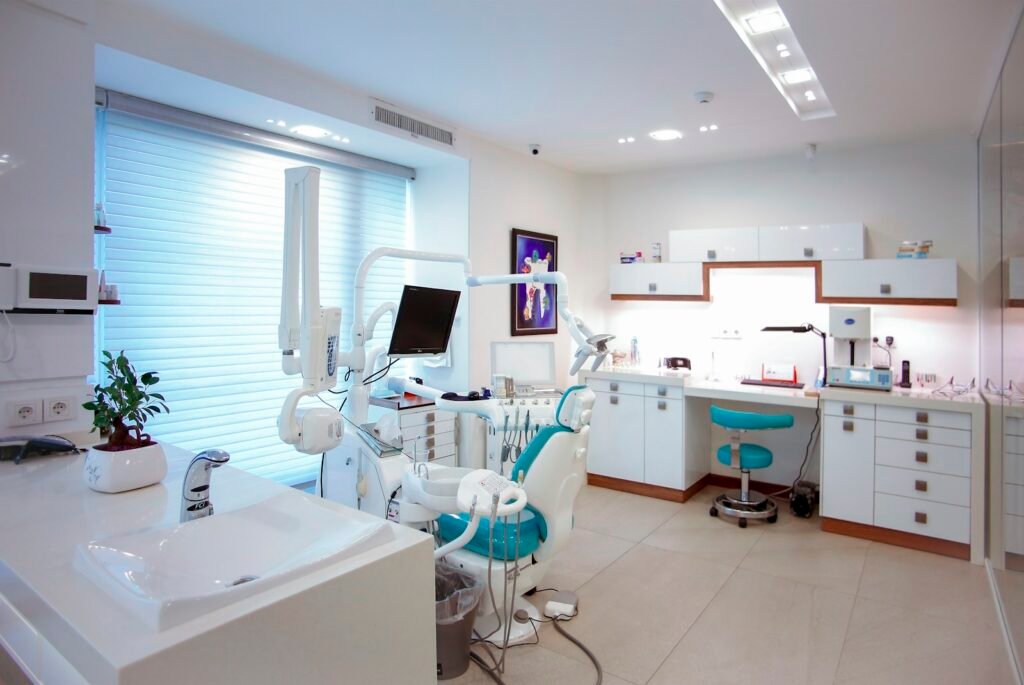
ChatGPT optimization is the work of making your dental practice discoverable and quotable by conversational assistants. Rather than competing for a position on a results page, you are competing to be one of the small number of providers a system mentions when it answers a question directly.
These systems assemble answers from a mixture of training data, live retrieval and third party sources such as directories, review platforms and local publications. That makes the work less about your own website in isolation and much more about how consistently and credibly your practice is described everywhere else.
Nobody can pay for placement in an assistant answer, and anyone claiming otherwise is selling something. What is achievable is removing every reason a system might hesitate to mention you, then giving it clear material to draw on.
A growing share of patients ask a question in plain language and act on the answer without ever seeing a results page.
If an assistant names three nearby practices and yours is not among them, you never enter the consideration set at all.
People describe a symptom, a budget or an anxiety. Content built around real questions matches that far better than keyword pages.
Assistants lean on directories, review platforms and local coverage. What others say about you can matter as much as your own site.
Systems describe practices in the aggregate tone of their reviews, so recency and how you respond materially affect the description.
Dental questions touch wellbeing, so assistants favour sources that look demonstrably qualified and accurate.
Practices that fixed their consistency early are already the default answer while competitors are still debating whether this matters.
Focused on the signals conversational systems actually rely on when deciding which local provider to name.
We research how patients phrase questions out loud rather than how they type them, then build content that answers those questions directly and completely.
Your name, address, phone, services and clinicians are aligned across every source a system might consult, because contradictions create doubt and doubt costs mentions.
Direct answers near the top, factual specifics, clear headings and honest limitations, so a summary of your page is accurate rather than vague marketing language.
An ethical process for earning recent reviews and responding to them, because assistants describe practices largely in the aggregate tone of patient feedback.
Markup that states your practice, treatments, clinicians and locations as facts, removing the interpretation step where mistakes happen.
We test how your practice is described for the questions that matter commercially, and track changes as models and retrieval sources update.
We start by finding out what assistants currently say about you, which is usually the most revealing part.
We ask assistants the questions your patients ask and record how your practice is described, or whether it appears at all.
Inconsistent details across your site, profiles and directories are corrected so every source agrees.
Question led content and credible corroboration give systems accurate material to summarize.
We re-run the same questions over time to see what changed, and adjust as retrieval sources shift.
It helps to be precise about how these systems work, because a great deal of advice in this area is built on assumptions that do not hold. Conversational assistants do not maintain a ranking of dental practices. They assemble an answer at the moment of asking, drawing on training data, live retrieval from the web and whatever third party sources they have access to.
That has a practical consequence. There is no position to climb. There is only the question of whether, when the answer is assembled, your practice appears in the material the system considers reliable enough to name.
The most common reason a practice fails to appear is not poor content. It is contradiction. A different practice name on the website than on the profile. An old address on directories nobody has updated since the move. A clinician listed who left three years ago.
Each conflict introduces uncertainty, and systems handling health related questions are conservative when uncertain. Resolving these contradictions is unglamorous work that produces a disproportionate share of the benefit.

When an assistant summarizes a page, it discards the design and the persuasion and keeps what reads as fact. Pages written as marketing copy summarize into something generic and get passed over in favour of a source that stated something specific.
The content that performs answers the question in the first paragraph, gives concrete detail about process, candidacy, cost factors and recovery, and is honest about when a treatment is not appropriate. That honesty is not a liability. It is a large part of what makes a source look trustworthy to both patients and machines.
Ask an assistant about a local practice and the reply frequently reflects the aggregate tone of its reviews rather than anything on its website. That makes review recency, volume and your responses part of your search presence rather than a separate reputation task.
A practice with a moderate number of recent, thoughtfully answered reviews often gets described more favourably than one with a larger pile that stopped years ago. Our reputation management page covers how to build that flow without pressuring patients.
We cannot guarantee that any assistant will name your practice, and we would be misleading you to suggest otherwise. Results vary by user, location, phrasing and which model happens to answer.
What we can commit to is the underlying work, honest measurement of how your practice is described before and after, and clarity about what is observed rather than inferred. This runs naturally alongside AI search optimization and conventional dental SEO, and most practices need all three. If you would like to see where you stand, get in touch.
We will ask the questions your patients ask and show you exactly how your practice is described today.

Assistants are cautious with health questions. Practices that look demonstrably qualified and internally consistent are the ones that get named.
We document the real treatments, process and clinicians at your practice, because specific detail is what survives being summarized.
Clinical claims are written for review and approval by the dentists who perform the work, so accuracy holds up to scrutiny.
Consistent details, credentials and independent mentions give systems corroboration rather than a single unverified claim.
We report what assistants actually said, including when the answer was unflattering or your practice did not appear at all.
What practice owners ask about assistants and patient acquisition.
Ask us anything about how assistants currently describe your practice.
We can make your practice considerably more likely to be named, but nobody can guarantee it. These systems assemble answers dynamically and the selection varies by user, location and phrasing. What we control is whether your practice is easy to identify, internally consistent, well corroborated by third parties and supported by content that summarizes accurately. Those are the conditions that make a mention possible. Anyone promising guaranteed inclusion is describing something they cannot deliver.
The foundations overlap substantially, because assistants retrieve from the same web that search engines index. The differences are in emphasis. Conventional SEO competes for a position among ten results. Assistant optimization competes to be one of perhaps three providers named in a single answer, which places far more weight on consistency across sources, third party corroboration and whether your content survives summarization intact.
They influence the shortlist more than they send direct traffic. A patient may ask an assistant which practices nearby handle a specific treatment, then search for the named practice by name or go straight to its profile. That makes the effect hard to attribute in analytics, since it often shows up as branded search or direct visits. We are careful to describe this as influence rather than claiming precise attribution we cannot evidence.
We compile the questions your patients realistically ask, then put those questions to the major assistants and record the responses, including whether your practice appears, how it is characterised and which competitors are named instead. Because answers vary, we test repeatedly rather than once. That baseline is what later work is measured against, and it is usually the most eye opening part of the engagement.
Yes, noticeably. Assistants asked about a local practice frequently summarize the aggregate sentiment of its reviews. Recency matters as much as volume, because a system reading reviews that stopped two years ago has little to say about the practice today. How you respond matters too, since thoughtful replies to criticism read very differently from silence or defensiveness.
Often it is worth more, because competitive markets tend to have more practices with inconsistent information, which creates openings. We usually narrow the focus first, targeting specific treatments and neighbourhoods rather than the broadest possible query. Being reliably named for a narrower set of high intent questions produces more appointments than being occasionally mentioned for a very general one.
Consistency corrections can register relatively quickly, since you are fixing facts rather than building reputation. Content and corroboration accumulate over months. Because retrieval sources and models update on their own schedules, changes appear less predictably than conventional rankings, sometimes in steps rather than gradually. We retest at intervals rather than promising a date by which something will happen.
There is honest overlap and we would rather say so than invent a distinction. Much of the foundation, accuracy, structured data, authority and reviews, serves both. What is genuinely different is testing how assistants describe you, optimising content specifically to survive summarization, and treating third party consistency as a primary objective rather than a tidy up task. If your fundamentals are weak, we would start there instead.
Generally no. Well written content that answers real patient questions directly serves both people and machines. What sometimes needs adding is structure: an explicit answer near the top of the page, headings phrased as questions, and factual specifics that a summary can carry. Those changes improve the page for human readers too, which is a reasonable test of whether a tactic is legitimate.
A list of the treatments and areas that matter commercially, access to your website and Google Business Profile, and details of your clinicians. From there we can baseline how assistants currently describe you. If your profiles or listings are incomplete we will flag that first, because inconsistent source data undermines everything built on top of it.
Send us your details and we will ask the questions your patients ask, then show you how your practice is described today and what is keeping you out of the answer.
Tell us about your practice and we will come back with where you stand.